INFL

Showing posts with label spider. Show all posts

Monday, May 26, 2014

Black Widow Spider

Black Widow Spider


Latrodectus hesperus

Photo: Female black widow spider on a leaf
Notorious for their bloodthirsty courtship, black widow spiders are identified by the colored markings on their black bodies.
Photograph by George Grall
Black widows are notorious spiders identified by the colored, hourglass-shaped mark on their abdomens. Several species answer to the name, and they are found in temperate regions around the world.
This spider's bite is much feared because its venom is reported to be 15 times stronger than a rattlesnake's. In humans, bites produce muscle aches, nausea, and a paralysis of the diaphragm that can make breathing difficult; however, contrary to popular belief, most people who are bitten suffer no serious damage—let alone death. But bites can be fatal—usually to small children, the elderly, or the infirm. Fortunately, fatalities are fairly rare; the spiders are nonaggressive and bite only in self-defense, such as when someone accidentally sits on them.
The animals most at risk from the black widow's bite are insects—and male black widow spiders. Females sometimes kill and eat their counterparts after mating in a macabre behavior that gave the insect its name. Black widows are solitary year-round except during this violent mating ritual.
These spiders spin large webs in which females suspend a cocoon with hundreds of eggs. Spiderlings disperse soon after they leave their eggs, but the web remains. Black widow spiders also use their webs to ensnare their prey, which consists of flies, mosquitoes, grasshoppers, beetles, and caterpillars. Black widows are comb-footed spiders, which means they have bristles on their hind legs that they use to cover their prey with silk once it has been trapped.
Find more here... http://animals.nationalgeographic.com/animals/bugs/black-widow-spider/

Tuesday, July 17, 2012

Spider Venom Could Treat Muscular Dystrophy


Protein Found in Spider Venom Could Treat Muscular Dystrophy

ScienceDaily (July 16, 2012) — While Spider-Man is capturing the imagination of theatergoers, real-life spider men in Upstate New York are working intently to save a young boy's life.

UB researchers are developing a treatment for muscular dystrophy using a peptide found in the venom of a Chilean rose tarantula. (Credit: Image courtesy of University at Buffalo)
It all began in 2009, when Jeff Harvey, a stockbroker from the Buffalo suburbs, discovered that his grandson, JB, had Duchenne muscular dystrophy. The disease is fatal. It strikes only boys, causing their muscles to waste away.
Hoping to help his grandson, Harvey searched Google for promising muscular dystrophy treatments and, in a moment of serendipity, stumbled upon University at Buffalo scientist Frederick Sachs, PhD.
Sachs was a professor of physiology and biophysics who had been studying the medical benefits of venom. In the venom of the Chilean rose tarantula, he and his colleagues discovered a protein that held promise for keeping muscular dystrophy at bay. Specifically, the protein helped stop muscle cells from deteriorating.
Within months of getting in touch, Harvey and Sachs co-founded Tonus Therapeutics, a pharmaceutical company devoted to developing the protein as a drug. Though the treatment has yet to be tested in humans, it has helped dystrophic mice gain strength in preliminary experiments.
The therapy is not a cure. But if it works in humans, it could extend the lives of children like JB for years -- maybe even decades.
Success can't come quickly enough.
JB, now four, can't walk down the stairs alone. When he runs, he waddles. He receives physical therapy and takes steroids as a treatment. While playing tee ball one recent day, he confided to his grandfather, "When I grow up, I want to be a baseball player." It was a heartbreaking moment.
"Oh, I would be thrilled if you could be a baseball player," Harvey remembers replying. He's doing everything he can to make sure that JB -- and other boys like him -- can live out their dreams.
Story Source:
The above story is reprinted from materials provided byUniversity at Buffalo.
link: http://www.sciencedaily.com/releases/2012/07/120716142657.htm 

Sunday, May 6, 2012

Daddy long-legs spider


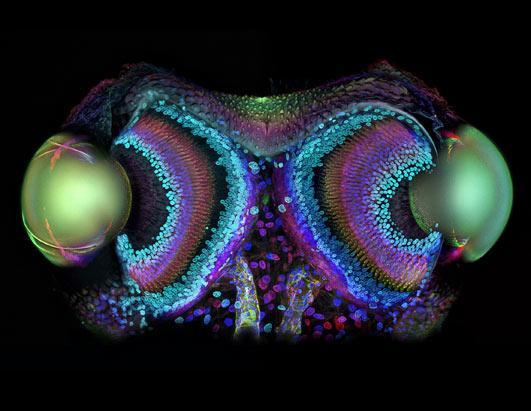
This image of a bug-eyed daddy long-legs spider took top honors in the 2010 Olympus BioScapes Digital Imaging Competition. Dr. Igor Siwanowicz, of the Max Planck Institute for Neurobiology in Munich, Germany, shot the image, which was selected out of 2,000 submissions. (Dr. Igor Siwanowicz of the Max Planck Institute for Neurobiology)


link: http://abcnews.go.com

Friday, April 27, 2012

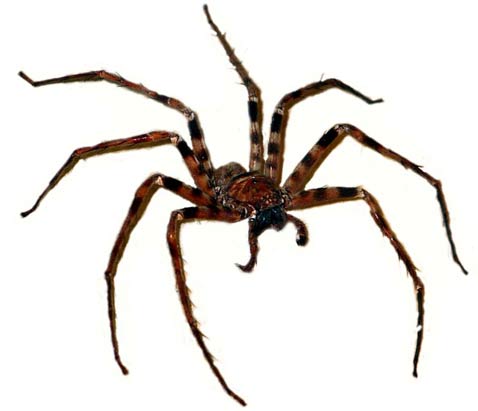
Heteropoda maxima


The Heteropoda maxima (shown here) is one of more than 1,000 new species discovered around the Mekong River in southeast Asia over the past 10 years, according to a new report by conservation group World Wildlife Fund). With a legspan of up to 11.8 inches, the species is the largest huntsman spider in the world. (Courtesy Petra and Wilfried Creative Commons/WWF)


link: http://abcnews.go.com