INFL

Showing posts with label animals. Show all posts

Thursday, September 6, 2012

How to distinguish good meats from bad meats

Healthy meat consumption 101 - How to distinguish good meats from bad meats

(NaturalNews) Vegetarians who personally avoid eating meat for health reasons will sometimes suggest to their friends that, in general, eating meat is harmful to health. But the all-encompassing term "meat" is a misnomer, as there are many different kinds of meat that a person can eat -- conventional, feedlot-based meats; organic, grass-fed meats; and everything in between -- and some meats are actually healthy, while others are not.



Most of the meat sold in the meat section at your local grocery store, whether it is beef, chicken, pork, or fish, comes from animals that have been raised in an industrial environment, and fed artificial foodstuffs that would not otherwise have been a part of their natural diet. Conventional beef, for instance, typically comes from cows raised in confinement, that have no access to pasture, and that are fed an unhealthy diet comprised of genetically-modified (GM) corn and soy byproducts during the final stages of their lives.

Throughout their lives, these same conventional cows are often pumped up with artificial growth hormones, including antibiotics that help them develop faster and preliminarily avoid the diseases they would otherwise not develop if they were raised in an unconfined environment. Because their living environments are routinely infested with feces and filth, conventional cows are much more susceptible to disease than, say, pasture-raised cows.

Unnatural diets destroy animal health, quality of meat

Cows are ruminant animals, which means they are meant to eat grass, not corn and soy. When cows eat the latter, their digestive systems largely reject it, making them more prone to developing chronic illness. The term "feedlot bloat" refers to the digestive disordercharacterized by the unnatural development of foam in the rumen -- the rumen is the first compartment of a cow's stomach -- that is a result of eating unnatural feed.

Corn and soy byproducts, in other words, so disrupt cows' digestive systems that the poor animals develop a severe inability to breathe, and sometimes even die. High-grain diets are disastrous for ruminant animals like cows, and yet it has become common practice in today's industrial food system to feed cows high amounts of grains in the last few months prior to their slaughter.

The situation is much the same for chickens and pigs, which are typically held and confinement and fed an unnatural diet that changes the composition of their meat. Even fish meat, much of which is now "farm-raised," comes from fish that are not allowed to feed and develop naturally, which results in a significant compositional change in the quality of their meat.

Choose meat from wild, grass-fed, pasture-raised, organic, unconfined, non-grain-fed animals

The end result of such atrocious animal husbandry practices is that the final meat product is filled with antibiotics, hormones, and various other toxins, as well as imbalanced fat profiles that promote chronic illness and obesity. Industrial meat, in other words, is a serious threat to human health, and humanity would do well to take a more proactive approach in avoiding conventional meats for their own well-being.

So what about things like grass-fed beef? Or pasture-raised chicken and eggs? Or wild salmon? These healthy meats often get lumped in with the unhealthy meats into a single category known as "meat," which is both confusing and inaccurate. It turns out that animals raised in their natural environments, whether that be pasture for cows and chickens or streams and oceans for fish, produce meat that is rich in essential nutrients, healthy fats, amino acids, and high quality proteins.

A simple rule of thumb is to avoid meat from animals that were fed GMO feed, and that were raised in confinement, and instead choose grass-fed, pasture-raised meat from organically-tended animals.

To learn more about the benefits of grass-fed, pasture-raised meats, visit:
http://www.eatwild.com/healthbenefits.htm

Sources for this article include:

http://www.eatwild.com/healthbenefits.htm

Learn more: http://www.naturalnews.com/037058_dietary_meat_processed_animal_health.html#ixzz25WBMopAV

Friday, August 17, 2012

Golden Eagle


Golden Eagle

 
Aquila chrysaetos


Photo: Golden eagle with a mountain backdrop
The national bird of Mexico, golden eagles are North America's largest raptor.
Photograph by Joe McDonald/Animals Animals—Earth Scenes

Monday, August 6, 2012

GMOs bad effects on animals

GMOs cause animals to lose their ability to reproduce, Russian scientists discover

(NaturalNews) A study presented at the Days of Defense Against Environmental Hazards in Russia has unveiled once again the implicit dangers associated with the consumption of genetically-modified organisms (GMOs). According to Voice of Russia, scientists from the National Association for Gene Security and the Institute of Ecological and Evolutional Problems discovered that animals fed GMOs as part of their normal diet eventually develop the inability to reproduce.

A shocking revelation; the study is one of several that has identified a link between GMO consumption and infertility in recent years. And because it was conducted independently of the biotechnology industry, it came to far different conclusions than have most of the studies offered up for mainstream consumption in defense of GMOs.


Using hamsters as the test subjects, scientists observed that consumption of GM soybeans, which have never been a part of these creatures' normal diets, tended to slow sexual maturity and gradually eliminate the ability to reproduce. After several generations, hamsters consuming the "Frankensoy" eventually lost their innate ability to reproduce.

"We selected several groups of hamsters, kept them in pairs in cells and gave them ordinary food as always," said Dr. Alexei Surov, one of the authors of the study. "We did not add anything for one group but the other was fed with soya that contained no GM components, while the third group with some content of Genetically Modified Organisms and the fourth one with increased amount of GMO."

Dr. Surov and his team then monitored the various groups of cubs, including their rates of growth and birthing frequencies, and compared their findings to the cubs' diets. After several generations of cubs breeding with each other, the team observed that those cubs who ate GMOs as part of their diet eventually became completely sterile.

"[W]e noticed quite a serious effect when we selected new pairs from [the] cubs and continued to feed them as before," added Dr. Surov. "These pairs' growth rate was slower and reached their sexual maturity slowly. When we got some of their cubs, we formed the new pairs of the third generation. We failed to get cubs from these pairs, which were fed with GM foodstuffs. It was proved that these pairs lost their ability to give birth to their cubs."

Will widespread GMO consumption make future generations of humans infertile?

An Austrian study uncovered similar harm in mice that consumed GM corn. An immediate consequence among the mice eating the "Frankencorn" was that their offspring weighed less than normal, and overall litter size became smaller. After three or four generations, mice who came from GMO-eating parents and grandparents became completely infertile. (http://www.naturalnews.com)

Farmers across the U.S. have also reported infertility among pigs and cows that consume GM feed. And in India, an investigatory team observed infertility and other serious problems among buffalo that were consuming GM cottonseed.

Sources for this article include:

http://english.ruvr.ru/2010/04/16/6524765.html

http://www.naturalnews.com

http://www.huffingtonpost.com

Learn more: http://www.naturalnews.com/036710_GMO_animal_experiments_infertility.html#ixzz22pJ5yXuX

Thursday, August 2, 2012

Peregrine Falcon


Peregrine Falcon

 
Falco peregrinus


Photo: Peregrine falcon
Once an endangered species in the United States, North American peregrine falcon populations have made a great comeback due to bans on usage of DDT and similar pesticides.
Photograph by Michael Melford

Map

Map: Falcon range
Peregrine Falcon Range

Audio

Fast Facts

Type:
Bird
Diet:
Carnivore
Average life span in the wild:
Up to 17 years
Size:
Body, 14 to 19 in (36 to 49 cm); wingspan, 3.3 to 3.6 ft (1 to 1.1 m)
Weight:
18.8 to 56.5 oz (530 to 1,600 g)
Size relative to a 6-ft (2-m) man:
Illustration: Falcon compared with adult man
These falcons are formidable hunters that prey on other birds (and bats) in mid-flight. Peregrines hunt from above and, after sighting their prey, drop into a steep, swift dive that can top 200 miles an hour (320 kilometers an hour).
Peregrine falcons are among the world's most common birds of prey and live on all continents except Antarctica. They prefer wide-open spaces, and thrive near coasts where shorebirds are common, but they can be found everywhere from tundra to deserts. Peregrines are even known to live on bridges and skyscrapers in major cities.
These birds may travel widely outside the nesting season—their name means "wanderer." Though some individuals are permanent residents, many migrate. Those that nest on Arctic tundra and winter in South America fly as many as 15,500 miles (25,000 kilometers) in a year. Yet they have an incredible homing instinct that leads them back to favored aeries. Some nesting sites have been in continuous use for hundreds of years, occupied by successive generations of falcons.
Peregrine populations were in steep decline during the mid-20th century, and in the United States these beautiful falcons became an endangered species. The birds have rebounded strongly since the use of DDT and other chemical pesticides was curtailed. Captive breeding programs have also helped to boost the bird's numbers in the U.S. and Canada. Now populations are strong in those nations, and in some parts of the globe, there actually may be more peregrines than existed before the 20th-century decline.
Peregrines are favored by falconers, and have been used in that sport for many centuries.

Monday, July 30, 2012

Adélie Penguin


Adélie Penguin

 
Pygoscelis adeliae


Photo: An Adélie penguin walking on snow
Wings spread, this Adélie penguin waddles through an Antarctic colony. Its black tail gives it a tuxedo-like appearance.
Photograph by George F. Mobley

Map

Map: Penguin range
Adélie Penguin Range

Fast Facts

Type:
Bird
Diet:
Carnivore
Average life span in the wild:
Up to 20 years
Size:
27.5 in (70 cm)
Weight:
8.5 to 12 lbs (4 to 5.5 kg)
Group name:
Colony
Did you know?
Adult Adélie penguins have been observed stealing rocks from their neighbors’ nests.
Size relative to a 6-ft (2-m) man:
Illustration: Adelie penguin compared with adult man
Adélie penguins live on the Antarctic continent and on many small, surrounding coastal islands. They spend the winter offshore in the seas surrounding the Antarctic pack ice.
Adélies feed on tiny aquatic creatures, such as shrimp-like krill, but also eat fish and squid. They have been known to dive as deep as 575 feet (175 meters) in search of such quarry, though they usually hunt in far shallower waters less than half that depth.
Like other penguins, Adélies are sleek and efficient swimmers. They may travel 185 miles round-trip (about 300 kilometers) to procure a meal.
During the spring breeding season (in October), they take to the rocky Antarctic coastline where they live in large communities called colonies. These groups can include thousands of birds.
Once on land, Adélies build nests and line them with small stones. Though they move with the famed "penguin waddle" they are capable walkers who can cover long overland distances. In early spring, before the vast sheets of ice break up, they may have to walk 31 miles (50 kilometers) from their onshore nests to reach open water.
Male Adélie penguins help their mates rear the young and, without close inspection, the two sexes are nearly indistinguishable. They take turns sitting on a pair of eggs to keep them warm and safe from predators. When food is short, only one of the two chicks may survive. After about three weeks, parents are able to leave the chicks alone, though the offspring gather in groups for safety. Young penguins begin to swim on their own in about nine weeks.

Thursday, July 26, 2012

Gorilla Youngsters


Gorilla Youngsters Seen Dismantling Poachers' Traps—A First

"Very confident" four-year-olds outsmart hunters and protect their clan.

gorillas picture: young gorillas dismantle poacher's snare
Wild gorillas Rwema and Dukore destroy a primitive snare in Rwanda earlier this week.
Photograph courtesy Dian Fossey Gorilla Fund
Ker Than
Published July 19, 2012
Just days after a poacher's snare had killed one of their own, two youngmountain gorillas worked together Tuesday to find and destroy traps in theirRwandan forest home, according to conservationists on the scene.
"This is absolutely the first time that we've seen juveniles doing that ... I don't know of any other reports in the world of juveniles destroying snares," saidVeronica Vecellio, gorilla program coordinator at the Dian Fossey Gorilla Fund'sKarisoke Research Center, located in the reserve where the event took place.
"We are the largest database and observer of wild gorillas ... so I would be very surprised if somebody else has seen that," Vecellio added.
Bush-meat hunters set thousands of rope-and-branch snares in Rwanda's Volcanoes National Park, where the mountain gorillas live. The traps are intended for antelope and other species but sometimes capture the apes.
Adults are generally strong enough to free themselves. Youngsters aren't always so lucky.
Just last week an ensnared infant named Ngwino, found too late by workers from Karisoke, died of snare-related wounds. Her shoulder had been dislocated during escape attempts, and gangrene had set in after the ropes cut deep into her leg.
The hunters, Vecellio said, seem to have no interest in the gorillas. Even small apes, which would be relatively easy to carry away for sale, are left to die.
All-Natural Arsenal
Poachers build the snares by tying a noose to a branch or a bamboo stalk, Vecellio explained.
Using the rope, they pull the branch downward, bending it. They then use a bent stick or rock to hold the noose to the ground, keeping the branch tense. A sprinkling of vegetation camouflages the noose.
When an animal budges the stick or rock, the branch springs upward, closing the noose around the prey. If the creature is light enough, it will actually be hoisted into the air.
(See National Geographic magazine mountain gorilla pictures.)
Rwema and Dukore Save the Day
Every day trackers from the Karisoke center comb the forest for snares, dismantling them to protect the endangered mountain gorillas, which the International Fund for Nature (IUCN) says face "a very high risk of extinction in the wild."
On Tuesday tracker John Ndayambaje spotted a trap very close to the Kuryama gorilla clan. He moved in to deactivate the snare, but a silverback named Vubu grunted, cautioning Ndayambaje to stay away, Vecellio said.
Suddenly two juveniles—Rwema, a male; and Dukore, a female; both about four years old—ran toward the trap.
As Ndayambaje and a few tourists watched, Rwema jumped on the bent tree branch and broke it, while Dukore freed the noose.
The pair then spied another snare nearby—one the tracker himself had missed—and raced for it. Joined by a third gorilla, a teenager named Tetero, Rwema and Dukore destroyed that trap as well.
Gorilla Tactics
The speed with which everything happened makes Vecellio, the gorilla program coordinator, think this wasn't the first time the young gorillas had outsmarted trappers.
"They were very confident," she said. "They saw what they had to do, they did it, and then they left."
Silverbacks in the Kuryama group have occasionally been caught in the snares, so Vecellio thinks the juveniles would have known the traps are dangerous.
"That's why they destroyed them," Vecellio said.
"Quite Ingenious"
Despite the unprecedented nature of the event, Vecellio said she wasn't surprised by the reports. "But," she said, "I'm always amazed and very proud when we can confirm that they are smart."
Veterinarian Mike Cranfield, executive director of the Mountain Gorilla Veterinary Project, also said he wasn't shocked by the news.
"Chimpanzees are always quoted as being the tool users, but I think, when the situation provides itself, gorillas are quite ingenious," he said.
Cranfield speculated that the gorillas may have learned how to destroy traps by watching the Karisoke center's trackers.
"If we could get more of them doing it, it would be great," he joked.
Karisoke's Vecellio, though, said actively instructing the apes would be against the center's ethos.
"No we can't teach them," she said. "We try as much as we can to not interfere with the gorillas. We don't want to affect their natural behavior."

Tuesday, July 24, 2012

Lobsters and climate change


Lobsters to Be Supersized by Climate Change?

A small lobster is pictured at left, next to a larger lobster at right.
American lobsters raised in more acidic waters grow much larger (above, right) than lobsters grown in less acidic conditions (left), a December 2009 study found.

The experiment, which mimicked rising atmospheric carbon dioxide (CO2) levels that are predicted for Earth's atmosphere, shows acidic seas can produce jumbo-size shelled marine species, including lobsters, crabs, and shrimp.
Photograph courtesy Justin Ries, UNC-Chapel Hill
Brian Handwerk
National Geographic News
Attention lobster lovers—climate change may supersize your favorite seafood. So says a new study showing that more acidic oceans, a consequence of rising atmospheric carbon dioxide (CO2) levels, can produce jumbo-size shelled marine species, including lobsters, crabs, and shrimp. It's unknown whether the animals' body mass also gets beefier along with their shells. (Learn aboutgreenhouse gases.)
But it's not good news for all sea creatures. In the experiment, other species—including oysters, scallops, and clams—suffered in more acidic waters because they had more trouble building their shells.
That's because rising CO2 levels boost the amount of carbon in the oceans, but reduce levels of the carbonate ion that marine organisms need to make their protective shells.
Study leader Justin Ries, of the University of North Carolina at Chapel Hill, and colleagues grew 18 species of shelled marine animals in conditions that mimicked the elevated CO2 levels predicted in Earth's atmosphere over the next two centuries.
The lobsters and other animals that thrived under higher CO2 levels during the experiment are better able to convert the inorganic carbon in seawater into a form they can use to produce shells.
Acid Tipping Point
The team also found that some species, such as calcifying algae, benefited from increased CO2 up to a point—and then quickly began to die.
This may illustrate a specific CO2 "tipping point," which scientists could identify and monitor in future studies, according to the report published in December'sGeology.
But even animals that grew larger in more acidic waters may ultimately suffer if an ocean food chain evolved over hundreds of millions of years is rapidly reorganized.
For instance clams—a main prey of crabs and lobsters—have "completely different" responses to rising CO2, Ries said.
"It's a scenario where the predator is getting stronger and the prey is getting weaker. The [clams] may not be able to sustain their populations and ultimately the predators will also be adversely impacted when the prey populations crash."
Ecological Engineers Threatened
The scenario also poses problems for "ecological engineers" such as coral, which at first had no response to the acidic water but then began to die, Ries said.
"If corals decline, like the experiment predicts, then all the organisms that need a coral reef to survive, like crabs and lobsters, are going to suffer, even though they are predicted to do well [in more acid conditions]," he said.
Likewise, the winners in acidic oceans may also see setbacks, he added.
For instance, if species are pouring more of their hard-earned energy into shell growth, other biological functions like reproduction may decline.

Saturday, July 21, 2012

World's smallest working dog

کام کرنے والادنیا کا سب سے چھو ٹاکتا ’لوسی‘


واشنگٹن…این جی ٹی…امریکی ریا ست نیو جر سی کے لو سی نامی کتے کو دنیاکا سب سے چھو ٹا کام کرنے والا کتا تسلیم کرلیا گیا ہے ۔ڈھائی پونڈ وزن کے حامل لوسی کا قد صرف5اعشاریہ7انچ ہے جو ایک اسپتال میں معذور مریضوں کے لیے بحیثیت تھراپسٹ کام کرتاہے۔Leashes Of Loveنامی پروگرام کے تحت مختلف اسکولز،اسپتالوں اور نرسنگ ہوم میں کام کرنے والے تین سالہ لوسی کا نام دنیا کے سب سے کم وزن و پست قامت کام کرنے والے کتے کی حیثیت سے گینز بک آف ورلڈ ریکارڈ کا حصہ بنایا گیا ہے۔ 

Wednesday, July 18, 2012

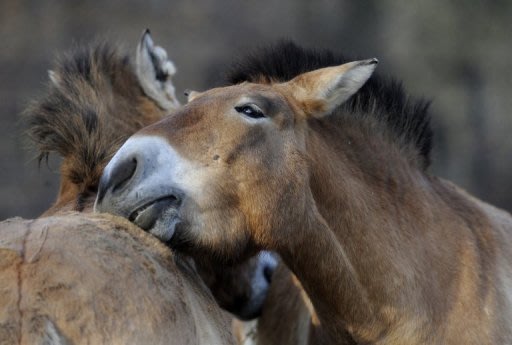
Endangered wild horses


Endangered wild horses head to Mongolia

Four rare Przewalski's wild horses were headed for the Mongolian steppe from Prague on Monday as part of a project to reintroduce the critically endangered species to its ancient homeland.
Prague zoo runs a breeding programme and is charged with keeping the world genealogy book for the equines which have survived only in captivity since the last wild horse was seen in Mongolia in 1969.

Przewalski horses share a moment …

The four mares, aged three to five, will be flown 18 hours in wooden boxes to Bulgan, about 200 kilometres (125 miles) northwest of the Mongolian capital Ulan Bator.
"The mares are more nervous than last year," Prague zoo director Miroslav Bobek said, referring to another four horses sent to Mongolia in 2011.
From Bulgan, the horses will be taken by road to the Gobi B national protected park, where the population of the horses shrank to 49 from 150 during the severe winter of 2009-2010.
"They must be animals of an adequate age, with the correct genetic setup, in a good shape, and we also chose them by character to avoid taking mares susceptible to stress," Bobek said.
Two mares sent last year have already given birth in the steppe.
"We'd like to continue with the transports to Mongolia... where we're trying to create sustainable conditions for both the horses and the people who live close to them," said Bobek.
Characterised by thick necks, large heads and stocky girths, Przewalski's horses weigh between 250-350 kilograms (550-770 pounds) and stand about 1.2-1.3 metres (3.9-4.3 feet) tall at the withers.
With ancient cave paintings in Lascaux, France, featuring wild horses eerily resembling the Przewalski variety, the species is thought to have lived in Europe 20,000 years ago, but climate change chased the animals away to Asia.
Europeans only encountered the wild horses at the end of the 19th century when Russian explorer and geographer Nikolai Mikhailovich Przewalski discovered them in mountains bordering the Gobi desert.
In the 20th century, hunting brought Przewalski's horses to the verge of extinction.

Friday, July 13, 2012

Aggressiveness in dog


If Your Dog Is Aggressive, Maybe It Is in Pain

ScienceDaily (June 13, 2012) — Dogs can sometimes suffer sudden episodes of aggression without their owners understanding why. But, in many cases, the cause of these attacks can be pain that has never been diagnosed or treated. For the first time the study describes the characteristics of this irritability, which can make dogs violent and increase aggression in already conflictive individuals.

The pain produced by hip dysplasia is a key factor in the risk of large dogs becoming aggressive. (Credit: Alex E. Proimos)
There are many factors that explain aggression in dogs: the conditions of the mother during gestation, the handling of the puppy in the neonatal phase, the age at weaning, the experiences of the animal during the socialising phase, diet, exercise, genetics and learning techniques based on active punishment during adulthood. However, aggressive behaviour also arises from the presence of pathologies and pain in the dog.
Between 2010 and 2011 a team of researchers from the department of Animal and Food Science at the Autonomous University of Barcelona (UAB) in Spain analysed the aggression problems of 12 dogs (Giant schnauzer, Irish setter, Pit-bull, Dalmatian, two German shepherds, Neapolitan Mastiff, Shih-tzu, Bobtail, Catalan Sheepdog, Chow-chow and Doberman) who were brought to the UAB's Veterinary Hospital by their owners.
"All (eleven males and one female) were diagnosed as having aggression caused by pain. Out of the 12 studied, eight had suffered a hip dysplasia," as was outlined by Tomás Camps, lead author of the study that was published in the Journal of Veterinary Behavior and researcher at the Animal Nutrition and Welfare Service of the UAB.
Scientists identified the most frequent circumstances in which dogs were aggressive, the most characteristic positions, the most frequent target of attacks and if they were impulsive or, in other words, whether or not they showed signs before an imminent attack.
The study shows that dogs that were already aggressive for other reasons before the onset of pain attacked their owners more intensely and frequently when food was taken away, when they were moved from their rest area or when they were made to do something. Animals displayed aggression in the same situations (or nearly) as those that were already aggressive.
On the other hand, "dogs that had never been aggressive before the onset of pain began to behave in this way in situations were an attempt is made to control them," points out Camps.
In addition, the study shows that those dogs were more impulsive or, in other words, attacked with no prior warning in the form of growls, for instance. The research team states that "if the pet is handled when in pain, it will quickly act aggressively to avoid more discomfort without the owner being able to prevent it."
Diagnosing hip dysplasia
Canine hip dysplasia affects more than 40% of Golden Retrievers, Labradors and Rottweillers and is a hereditary and degenerative bone disorder that affects the joint connecting the hip and the femoral head. In general, it can affect any breed of large dog but is less frequent is small breeds.
The new study suggests that the pain produced by hip dysplasia is a key factor in the risk of large dogs becoming aggressive. But the problem begins when the dog experiences periods of little pain and the illness is not diagnosed on time.
The researchers have reassessed the importance of diagnosis and treatment of pain since, according to Camps, "it can cause aggression or worsen aggression problems."
Story Source:
The above story is reprinted from materials provided byPlataforma SINC, via AlphaGalileo.
Note: Materials may be edited for content and length. For further information, please contact the source cited above.

Journal Reference:
  1. Tomás Camps, Marta Amat, Valentina M. Mariotti, Susana Le Brech, Xavier Manteca. Pain-related aggression in dogs: 12 clinical casesJournal of Veterinary Behavior: Clinical Applications and Research, 2012; 7 (2): 99 DOI:10.1016/j.jveb.2011.08.002

Wednesday, July 4, 2012

Motion Sensors for Horse Lameness


Motion Sensors Detect Horse Lameness Earlier Than Veterinarians

ScienceDaily (July 3, 2012) — The most common ailment to affect a horse is lameness. A University of Missouri equine veterinarian has developed a way to detect this problem using a motion detection system called the "Lameness Locator." Now, Kevin Keegan, a professor of equine surgery in the College of Veterinary Medicine at MU, has found that his Lameness Locator can detect lameness earlier than veterinarians using the traditional method of a subjective eye test.

Equine veterinarians have developed a way to detect lameness using a motion detection system called the "Lameness Locator." (Credit: Image courtesy of University of Missouri-Columbia)

The Lameness Locator, which is now in commercial use, places small sensors on the horse's head, right front limb and croup, near the tail. The sensors monitor and record the horse's torso movement while the horse is trotting. The recorded information is then transferred to a computer or mobile device and compared against databases recorded from the movement of healthy horses and other lame horses. The computer is then able to diagnose whether or not the horse is lame.
In a new study published in theEquine Veterinary Journal, Keegan and co-author Meghan McCracken, an equine surgery resident at MU, put special adjustable shoes on horses that temporarily induced symptoms of lameness. The horses were then monitored by the Lameness Locator as well as by a number of veterinarians using any lameness testing methods they wished. If no lameness was detected by either the veterinarians or the Lameness Locator, the special shoes were adjusted slightly to increase the symptoms of lameness. This process was repeated until both the Lameness Locator and the participating veterinarians properly identified in which leg of the horse the lameness was occurring. Keegan and McCracken found that the Lameness Locator was able to correctly identify lameness earlier than veterinarians using subjective eye test methods more than 58 percent of the time and more than 67 percent of the time when the lameness occurred in the hind legs of the horse. Keegan attributes this to the sensors' high sensitivity levels.
"There are two reasons why the Lameness Locator is better than the naked eye," Keegan said. "It samples motion at a higher frequency beyond the capability of the human eye and it removes the bias that frequently accompanies human subjective evaluation."
Because equine lameness may begin subtly and can range from a simple mild problem affecting a single limb to a more complicated one affecting multiple limbs, veterinarians and horse owners know that early detection is the key to successful outcomes.
"If veterinarians can detect lameness earlier, before it gets too bad, it makes treatment much easier," Keegan said. "Lameness often goes undetected or undiagnosed entirely, which can cause owners to retire horses earlier than needed, simply because they cannot figure out why the horses are unhealthy. The Lameness Locator should be able to help with that as well."

Story Source:
The above story is reprinted from materials provided byUniversity of Missouri-Columbia.
Note: Materials may be edited for content and length. For further information, please contact the source cited above.

Journal Reference:
  1. M. J. Mccracken, J. Kramer, K. G. Keegan, M. Lopes, D. A. Wilson, S. K. Reed, A. Lacarrubba, M. Rasch.Comparison of an inertial sensor system of lameness quantification with subjective lameness evaluation.Equine Veterinary Journal, 2012; DOI: 10.1111/j.2042-3306.2012.00571.x

http://www.sciencedaily.com/releases/2012/07/120703162620.htm

Saturday, May 26, 2012

Warning to vegetarians

Warning to vegetarians: Many prescription drugs secretly made with animal parts

(NaturalNews) Genetically modified organisms and bovine growth hormones are in thousands of prescription drugs all over the world without any warning whatsoever. Plus, over 40% of humans are allergic to eitherconsuming or injecting gelatin, which is the most popular hidden animal part in drugs and vaccines today. In fact, the gelatin coatings, capsules and liquid additives for medicines are not made from harmless food, but ratherfrom the skin, cartilage, connective tissues and bones of animals, and to put "nails in the coffin," these are NOT the grass and grain fed, free range, humanely treated animals, that's for sure.


For decades now, gelatin has come from abused, hormone-fed, antibiotic injected, sick, dying, and disease laden animals; which means the dead animals that even thefast food giants won't acceptare dumped into grinders and made into gelatin. These poor animals that are shot up with hormones and fed GMO, pesticide-ridden corn by-products their whole lives, have blood infections from mal-nourishment and corn sugar, and this settles into their body, so when humans consume gelatin, they are also consuming these horrific, disease breeding chemicals. Many animals in CAFOs (concentrated animal feeding operations) in the U.S. and the U.K. are also fed by-products of their own species. Remember the mad cow disease outbreaks?

Meat in Medicine and Vitamins

World wide production of gelatin exceeds 300,000 tons per year. Vegetarians and vegans are usually very careful shoppers, trying to avoid all meat products and chemicals on a regular basis, butmillions of consumers do not know about gelatinand where it comes from, andthat's the way the food industry likes it. Vegan or not, everyone who takes vitamins and supplements is likely eating infected animal parts when they swallow gelatin capsules.

A survey in a recent postgraduate Medical journal shows 25% of patients are unknowingly prescribed drugs containing gelatin, contrary to their beliefs. That's correct: there are unlabeled, cancer-causing growth hormones in prescription pharmaceuticals and vaccines. Are you ready to get that flu shot, or maybe the next swine flu scam shot? In vaccines, gelatin is used as a heat stabilizer and suspension agent. Allergic reactions include abdominal pain and cramping, high pitched breathing sounds, and anaphylaxis (can include swelling of the throat). Vaccine companies cannot guarantee the purity of animal cells used in their vaccine cultures.

Using common sense is vital

Would you take a pill which came in a gelatin capsule that contained a viral and bacterial mixture of the disease which that very pill's ingredients were intended to prevent? If you could inject a syringe in a diseased cow or pig's stomach, extract some blood, mix it with a small portion of a specific new disease, and then inject it into your arm, all in hopes of avoiding that disease, even though you might get it from this very procedure anyway, would you do it? Wouldn't it be wiser to just take vegetarian vitamins and minerals to build up immunity? (http://library.thinkquest.org/05aug/00112/mad_cow_frameset.htm)

In 1997, the FDA (U.S. Food and Drug Administration) met with theTSE Advisory Committee(Transmissible Spongiform Encephalopathies; a.k.a. BSE/Mad Cow Disease) to help assess the safety of imported AND domestic gelatin, andgelatin by-products(how much worse can it get?) with regard to the risk of BSE posed by gelatin sourcing and processing. The big question at the meeting was whether the processing procedure was enough to optimally "inactivate" any contaminating agent. They all agreed that the "alkali treatment" was a key step, but also agreed that scientific evidence was "insufficient at this time to demonstrate that these treatments would effectively remove the BSE infectious agent if present in the source material." (Meaning it's too late to kill it at the factory).

TSE went on to recommend that the FDA consult "outside experts," and also assure that manufacturers adhere to these regulations. That's a complete joke, because the origin of gelatin, as defined by the FDA, states that it is "derived from either bovine, porcine (pig),or other animal source; however, no formally validated reference method to confirm the origin of gelatin's raw materials is available yet." So how are those inspections and regulations going to hold water if they don't even know where the raw materials are coming from? Maybe those raw materials are also cats, dogs and horses?
(http://www.gelatine.org)

Plus, if you think for one second that the FDA, the organization which allows nearly 90% of all food to be contaminated with GMO chemicals, is going to spend hundreds of thousands of dollars to consult "outside experts" to review the safety of gelatin, research where it comes from, and inspect the processing plants, you're dead wrong.

Gelatin is classified as "food stuff" by the FDA, so you can be sure it took years of research and lab testing, andmillions of dollarsto come up with such a technical and scientific name.

Sources for this article include:

http://www.bbc.co.uk/news/health-17182625

http://www.holistic-herbalist.com/vegetarian-capsules-1.html

http://www.scam.com/showthread.php?t=7609

http://www.drfostersessentials.com

http://www.peta.org

http://www.novaccine.com/vaccine-ingredients/results.asp?sc=10

http://www.gelatine.org/en/about-gelatine/properties.html

http://library.thinkquest.org/05aug/00112/mad_cow_frameset.htm

http://www.earthclinic.com/CURES/mad_cow.html

http://www.priondata.org/data/A_DMSO.html

http://www.anaphylaxistreatment.com/

Learn more:http://www.naturalnews.com/035253_prescription_drugs_animal_parts_vegetarians.html#ixzz1vzxus5oN