INFL

Showing posts with label fish. Show all posts

Thursday, January 16, 2014

Pelican

Pelican


Pelecanus
Photo: A brown pelican
A brown pelican
Photograph courtesy Gary M. Stolz/U.S. Fish and Wildlife Service
There are more than half a dozen species of pelicans, but all of them have the famous throat pouch for which the birds are best known. These large birds use their elastic pouches to catch fish—though different species use it in different ways.
Many pelicans fish by swimming in cooperative groups. They may form a line or a "U" shape and drive fish into shallow water by beating their wings on the surface. When fish congregate in the shallows, the pelicans simply scoop them up. The brown pelican, on the other hand, dives on fish (usually a type of herring called menhaden) from above and snares them in its bill. Pelicans do not store fish in their pouch, but simply use it to catch them and then tip it back to drain out water and swallow the fish immediately. The American white pelican can hold some 3 gallons (11 1/2 liters) of water in its bill. Young pelicans feed by sticking their bills into their parents' throats to retrieve food.
Pelicans are found on many of the world's coastlines and also along lakes and rivers. They are social birds and typically travel in flocks, often strung out in a line. They also breed in groups called colonies, which typically gather on islands.

Sunday, November 24, 2013

Wood Stork

Wood Stork

Mycteria americana
Photo: Wood stork in water
Wood storks fish with an unusual but effective method: Opening their bills underwater, they wait for a fish to pass by, then snap!, like a mousetrap, the bill is closed, and the fish is eaten.
Photograph by Joel Sartore
Wood storks are tall, white denizens of freshwater or brackish wetlands and swamps. They can be identified by their long legs, featherless heads, and prominent bills.
These waders feed on minnows in shallow water by using their bills to perform a rare and effective fishing technique. The stork opens its bill and sticks it into the water, then waits for the touch of an unfortunate fish that wanders too close. When it feels a fish, the stork can snap its bill shut in as little as 25 milliseconds—an incredibly quick reaction time matched by few other vertebrates.
The storks prefer to employ this technique in isolated pools created by tides or falling freshwater levels, where fish congregate en masse. In some areas, such as Florida, breeding begins with the dry season that produces these optimal fishing conditions.
Though wood storks eat small fish, they eat a lot of them. An average nesting pair, with two fledglings, may eat over 400 pounds (181 kilograms) of fish during a single breeding season.
Wood storks are social animals. They feed in flocks and nest in large rookeries—sometimes several pairs to a single tree. Females lay two to five eggs, which both sexes incubate for about one month. Young fledge about two months after hatching.

Friday, June 21, 2013

Osprey

Osprey 

Pandion haliaetus
Photo: An osprey preparing to dive
An osprey preparing to dive
Photograph courtesy NASA
Ospreys are superb fishers and indeed eat little else—fish make up some 99 percent of their diet. Because of this appetite, these birds can be found near ponds, rivers, lakes, and coastal waterways around the world. Ospreys hunt by diving to the water's surface from some 30 to 100 feet (9 to 30 meters) up. They have gripping pads on their feet to help them pluck fish from the water with their curved claws and carry them for great distances. In flight, ospreys will orient the fish headfirst to ease wind resistance.
Ospreys are sometimes confused with bald eagles, but can be identified by their white underparts. Their white heads also have a distinctive black eyestripe that goes down the side of their faces. Eagles and ospreys frequent similar habitats and sometimes battle for food. Eagles often force osprey to drop fish that they have caught and steal them in midair.
Human habitat is sometimes an aid to the osprey. The birds happily build large stick-and-sod nests on telephone poles, channel markers, and other such locations. Artificial nesting platforms are common in areas where preservationists are working to reestablish the birds. North American osprey populations became endangered in the 1950s due to chemical pollutants such as DDT, which thinned their eggshells and hampered reproduction. Ospreys have rebounded significantly in recent decades, though they remain scarce in some locales.

Thursday, July 19, 2012

Virus Discovered in Cultus Lake Sport Fish


Virus Discovered in Cultus Lake Sport Fish

A Simon Fraser University fish-population statistician, working in collaboration with non-government organization scientists, has uncovered evidence of a potentially deadly virus in a freshwater sport fish in B.C.
SFU professor Rick Routledge and Stan Proboszcz, a fisheries biologist at the Watershed Watch Salmon Society, have found evidence of the piscine reovirus (PRV) in cutthroat trout caught in Cultus Lake, in the Fraser Valley region of B.C. Tests conducted by, Fred Kibenge, a virology professor at the Atlantic Veterinary College in Prince Edward Island, found evidence of the virus in 13 of 15 sampled fish. Follow-up analyses further confirmed the virus's presence in these fish and identified their genetic sequencing as 99 per cent identical to Norwegian strains. The virus has been scientifically linked to heart and skeletal muscle inflammation (HSMI), a disease that has reportedly become widespread in Norwegian salmon farms and can kill up to 20 per cent of infected fish. Routledge believes this first ever discovery of PRV in a B.C. freshwater sport fish indicates the virus could be prevalent in B.C. Many Canadian scientists and interest groups are concerned that B.C. salmon farms pose a serious risk to wild Pacific salmon. Scientists in other countries have specifically raised concerns about the spread of PRV from farms to wild salmon. "If PRV has been found in a Cultus Lake sport fish it could be contributing to the failure of the lake's sockeye population to return in abundance," says Routledge. He notes the federal government-mandated Committee on the Status of Endangered Wildlife in Canada has listed the species as endangered. "The discovery of PRV in Cultus Lake's cutthroat trout also begs the question is it in other related species in the lake, such as rainbow trout, kokanee and Dolly Varden? This latest discovery could also mean that salmon and trout in any lake exposed to spawning salmon returning from the North Pacific must be considered at risk of infection."

Rick Routledge, an SFU fish-population statistician, says he has helped uncover a potentially deadly virus in a B.C. freshwater sport fish.

Earlier this year, SFU honorary degree recipient Alexandra Morton, an independent biologist who collaborates on fish research with Routledge, reported that lab tests had found PRV in Atlantic salmon sold in B.C. supermarkets. PRV is the second virus commonly associated with salmon farming that scientists say they have found in wild Pacific salmon and trout. Last fall, Routledge and Morton reported positive test results for the infectious salmon anaemia virus (ISAv) in sockeye salmon smolts. Scientists testifying at the Cohen Commission Inquiry — a federally commissioned investigation of the Fraser River's declining sockeye population — have brought forth highly contested evidence of ISAv in other wild salmon populations, including Cultus Lake sockeye. The inquiry is scheduled to release its findings this fall. "We discovered during the Cohen inquiry that pathogens are a major concern for B.C.'s salmon," says Craig Orr, executive director of Watershed Watch and an SFU graduate. "Our findings suggest we need to broaden our thinking and concerns for freshwater fish as well." "There are many examples of devastating impacts of introduced pathogens in human, mammal and marine populations," adds Routledge. "When small pox was introduced to North America it decimated the aboriginal population, which had not had any previous opportunity to build up a natural immunity to the disease. The potential for this to happen to B.C.'s highly valued Pacific salmon and trout populations must be taken seriously." Provided by Simon Fraser University 

Friday, May 25, 2012

Noise and Marine Life

Our Noise could be Killing Our Marine Life


(NaturalNews) Noise on the oceans has increased considerably since the 1960s. A 2006 study at Scripps Institution of Oceanography at the University of California, San Diego, showed that our underwater world has become a much noisier place than it once was. This noise could be killing ocean life.


The study compared acoustic data recorded by the US Navy in the same area of San Nicolas Island west of San Diego. Results showed that noise levels were 10 to 12 decibels higher in 2003-2004 than in 1964-1966,an increase of three decibels per decade.

This noise may be caused by ships, wind farms, drilling, pile driving, construction and seismic testing.

Marine life uses sounds from the natural environment for many aspects of life. Although marine animals use vision they also gain auditory information that is far more extensive than the visual sense. In fact, notes Dr. Popper of the University of Maryland, sounds provide marine animals with a three dimensional view of the world.

An article titled `Human-Generated Sounds May Be Killing Fish` reported that invasive human noise could alter behavior patterns and mean the difference between life and death for marine animals. Marine animals can suffer from stress or become disoriented due to noise pollution in the same way as humans or land animals.

The construction and maintenance of coral reefs depends on sound. Dutch researchers in Curacao found that coral larvae use sound to establish a colony. Coral reefs support a vast range of aquatic life. Now threatened by global warming, storms and ocean acidification, the effect of noise pollution caused by humans on coral reefs may be yet another crucial deciding factor in the life and death equation of ocean life.

Dr. Steve Simpson of the University of Bristol conducted research into baby reef fish and discovered that baby reef fish use sounds made by fish, shrimp and sea urchins to find coral reefs. This fish needs coral reefs in order to thrive.

But in the crucial early hours of life, exposure to artificial noise can cause this fish to make the wrong choices. Notes Dr. Simpson, ``If fish accidentally learn to follow the wrong sounds, they could end up stuck next to a construction site or follow a ship back out to sea.``

In `Lonely Whales Shout to Overcome Noise` North American right whales are reported to battle environmental noise by raising their voices just like people in a noisy bar. Susan Parks, assistant professor of acoustics, Penn State, says that in a noisy ocean, it is ``critical for successful communication in an increasingly noisy ocean`` to be able to alter sound production.

Whales produce `upcalls` when they are alone or when they are joining a group of whales. Parks` study determined that an increase in background ocean noise due to commercial shipping has produced a corresponding increase in whale upcalls.

But there are considerable risks for the whales in increasing their upcalls. They expend more energy and alter their signals and the information contained in a signal, and they increase the risk of predators. Also, increased ocean noise lowers the communication range; feeding and mating could shrink, and stress levels could rise.

``It may be appropriate to move shipping lanes away from areas where there are concentrations of marine animals,`` a researcher noted. ``The impact of ocean noise pollution may be minimized by diminishing the noise source or by separating the noise from things that are sensitive to it.``

http://www.sciencedaily.com/videos/2006/0709-sounds_from_the_sea.htm
http://www.sciencedaily.com/releases/2008/04/080428140002.htm
http://www.sciencedaily.com/releases/2010/05/100514171908.htm
http://www.sciencedaily.com/releases/2010/08/100803212015.htm
http://www.sciencedaily.com/releases/2008/07/080728221125.htm
http://www.sciencedaily.com/releases/2009/03/090312093658.htm
http://www.sciencedaily.com/releases/2010/07/100706204713.htm
http://www.sciencedaily.com/releases/2006/08/060818173400.htm

Learn more:http://www.naturalnews.com/029658_marine_life_noise.html#ixzz1vtCBqtDn

Thursday, May 3, 2012

Dolphin


This dolphin, seen off the western coast of Australia, traps small fish in conch shells with its beaks, then brings the shells to the surface and shakes them to get the fish out. (Courtesy Murdoch University)


link: http://abcnews.go.com

Wednesday, April 25, 2012

Barreleye fish


Researchers at the Monterey Bay Aquarium Research Institute (MBARI) captured this image of a barreleye fish (Macropinna microstoma) in the deep waters just offshore of Central California from a video taken by a remotely operated video at depths of 2,000 to 2,600 feet. Since it was discovered in 1939, the barreleye's vision has been a mystery, until scientists at MBARI solved it on Feb. 23, 2009. The barreleye has extremely light-sensitive, tubular eyes that can rotate inside of its transparent head. Capped by bright green lenses, the fish's eyes point upward when it looks for food overhead, and then they point forward when the fish is feeding to focus on its prey. (Courtesy Monterey Bay Aquarium Research Institute)

link: http://abcnews.go.com

Friday, February 3, 2012

koi fish


Black Koi Fish Information

Black Koi fish is distinctively different from other koi fishes mainly due to their large color variations. Other than that it is typically the same as other colored Kois. Koi fishes come in a variety of colors making them highly attractive.
They are actually considered to be uniquely bred fishes and are known for their characteristic colors and color patterns. Generally black koi live for over thirty years but it is not a typical life span for this species.
The male and female koi fish are easily distinguishable from each other through their anal configurations.


That of males have more concave anus and their head have distinct breeding spots. These fish can spawn as much as 1,000 eggs. Baby koi fish are called fry and their survival is highly dependent on the water temperature. They cannot survive in very cold water.
A fry is not as colorful as adults but their color patterns become prominent by 3 weeks old. The first Kois bred by the Japanese were only of two color variety. But years of breeding allowed them to produce more color variants with colored patterns and combinations. Black koi is one of the most common variant but there are other gorgeous colored kois.
Black Koi can grow as long as 4 feet. When breeding this fish you need to keep in mind to build a larger pond for them. Magoi Koi was the first cultivated black koi that can grow thirty six inches in length. It is not actually black in color but instead is bronze. From above the water however it reflects a black color. Magoi are known to maximize the growth of other species through its blood by-products.
One of the old species of black koi is the Karasu or known as crow in Japanese. They are black colored in fins and body but some were bred with some color on their stomach usually white or orange.
Unique species of black koi is the Matsukawabake which comes in intriguing color variations due to water temperature and according to season. The change in its color is also influenced by the food it is fed on. The original black color of the Matsukawabake is retained if no temperature changes occur.
Many love to breed the dragon fish which is a black koi known as Kumonryu. It was first seen in 1980's and has grown in popularity since then. This fish has a mesmerizing body structure that is similar to a dragon commonly seen from the Japanese paintings.
This type of koi is capable of changing its color aside from being black. They are beautifully thought of being a dragon that is ascending through the sky's white clouds.
The beauty of black koi can be very enchanting with its glamorous patterns of color combination and their abilities to change color according to the current water temperature. Taking care of koi fish can be amusing and the black koi is the species that is a common favorite to all.
Randy Tan is a koi breeding expert. For more great tips on black koi fish information and general koi care, visit http://www.koibreedingtips.com

koi fish


Caring For Your Koi Fish Carp

Koi are those brilliantly colorful and gracefully mobile domesticated freshwater fish that are kept mainly in ponds worldwide. It may be hard to believe, but these fish are actually derived from the common carp often found in the wild, the colors of which are dull and usually grey or brown - a far cry from the vibrant reds, deep blacks, and shimmering whites of the koi. A long time ago, the Japanese took an interest in the creatures, and specifically bred them for color, until they came up with what is now universally known as koi. However, koi is simply "carp" in Japanese, which the natives are familiar with as food. The correct term, therefore, for these koi fish carp, would be nishikigoi.
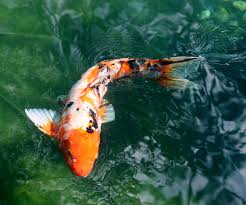

Koi fish carp have proven to be the most ideal ornamental fish for most hobbyists. Like the perfect lover, not only are they good-looking, they are also blessed with intelligence. Some koi can be trained to do tricks, but even without teaching them and with only time to assist you, you can make them eat directly from your hand. Another amazing feature is that they have maintained the toughness acquired from their ancestors, being able to survive freezing temperatures and sustain themselves in low quality water. Their dietary habits are uncomplicated: they are voracious eaters and not choosy about their food, making them easy to please.
But all these characteristics should not be construed as an excuse to care less for the koi fish carp than any other pet. These creatures are still high-maintenance despite their origins. Their resplendent colors will not stay that way forever, and even intelligent creatures get bored. Sooner or later the fish's endurance will give up on it, and they may die from cold or disease. Furthermore, while no koi fish carp has ever been recorded to die of overfeeding, eating too much can definitely make them fat and sluggish, and cause excessive waste elimination on their part, which leads to dirty and chemical laden water.
Koi fish carp have been originally bred for aesthetic purposes, and ever since then, the koi has continually evolved as efforts at coming up with more color combinations, and thus, more varieties are continuously being studied and applied today. Some techniques are kept secret until now, but supplying them with color enhancements is a popular trick of the trade. Food rich in carotenoid pigments and the algae known as spirulina are helpful in bringing out the best in a koi's color. Protein and carbohydrates are also essential in a koi's diet, as these fish are energetic and have a high metabolism. Plants in a pond not only provide a snack for koi fish carp, they also offer a form of amusement, being the intelligent and inquisitive creatures that they are.
While it is true that koi fish carp are hardy creatures, exposing them to cold or dirty water for too long will stress the fish, and make them less immune to sickness and disease. In cases like these, it becomes crucial to keep temperature and pH balance at the correct levels. When it comes to water quality, it is a good thing to keep in mind that clear water does not always mean it is clean, nor does unclear water mean it is dirty. What is important is that water does not contain ammonia, a byproduct of fish waste. This chemical robs the water of oxygen, and is poisonous to the fish. A high percentage of ammonia in the water can signify that the fish is putting out too much waste, which is in turn an indication of overfeeding. Overfeeding, on the other hand, does not only indirectly cause the water to be less habitable, but it also robs the koi fish carp of its potential to be the lively creatures they are supposed to be.
Koi fish carp are certainly not your ordinary carp, and they require a good deal of tender loving care. They are beautiful creatures indeed, and are thus entitled to the right treatment. Caring for the koi fish carp involves time, effort and a measure of wealth, so if these cannot be readily sacrificed, it is best to leave koi fish carp rearing to someone more devoted. They deserve that much.
Jake Ross is a koi fish expert. For more great information on koi fish carp [http://koifish.online-re-source.com/koi-fish-carp], visit [http://koifish.online-re-source.com].

koi fish


Koi 101 - Getting Your Desired Baby Koi Fish

Collecting a tropical fish is a delight for fish enthusiasts and professional breeders especially when they see their pets swimming around the pond or an aquarium. Like any other fish enthusiasts, Japanese Koi enthusiasts feels the same way, seeing their koi fish swimming around their koi pond gives them the relaxation that they need after a long and tiring day at work. Aside from being a stress reliever, koi fish can be beneficial to professional breeders since koi fish can produce a lot of baby koi, thus giving them more potential of making money if they intend to sell it.


Koi breeding is not as easy as it looks. It takes a lot of time, effort and patience in doing it. It is quite hard to select breeding partners to get the result that they want especially on how the baby koi may result into. Spawning, is the term used in breeding the baby koi, and it takes time to learn the art of doing this. Since the breeding period of koi fish depend on their metabolism and appetite, ideally, it is best to have them mate during the summer or from the months of April to July.
Here are some tips that you may want to try if you intend to go into koi fish breeding.
· Research and Consult the professional- do extensive research and planning before conducting the breeding. Since the color combination, scales and patterns of baby koi may entirely depend on the combination parents, better ask and consult professionals for better results. This will not only save your time but as money as well and you will be sure that the offspring that your koi parents is what you really wanted to begin with.
· Quality breeding pond- before getting your fish ready into mating, make sure that you have the best quality of pond water with high quality of pH level, good water oxygenation and filtration as these will play a big factor in your breeding success. It is also advised to separate the mating fish from the other fish as this may cause confusion. Moreover, put something into the water that the female koi can use to lay her eggs into such as underwater plant or other materials that are viable for the eggs to be safe when they are hatched.
· Pick out the koi variety you want to breed- get the best and healthiest koi available in your pond. Try breeding a female koi with two male koi as this yields better results and most number of eggs.
· Isolate the eggs- isolate the eggs from their parents to prevent cannibalism. It is best to take this kind of precaution to ensure that the eggs are safe.
These are some of the tips that you might need in your koi fish breeding. It may take some time to get everything right. Just make sure that when you do it, do it with constant care and precision so you can get your desired baby koi fish.
Click here to get your FREE 12 part mini course on Koi-Keeping Made Easy.
You'll learn more about baby koi fish, as well as koi care and feeding, how to select the right koi fish, and much, much more.
Sign up today!

Thursday, December 22, 2011

fish recipes


Five Quick, Easy and Healthy Microwave Fish Recipes

Fish are one of the best food stuffs you can eat. They contain great natural oils that are not only good for the brain but also for your skin. The fatty acids contained in Omega 3 can contribute to the health of the brain and retina. Eating fish twice a week can reduce the risk of Heart disease, Dementia, cholesterol, High blood pressure and children who eat fish regular have less of a tendency to become obese.


Here are five quick and easy fish recipes that can be prepared in minutes in you microwave oven. Why use your microwave? Because if you get right it really is the best way to cook fish.If cooked with the right covering the fish will steam naturally in its own juices.
1; Garlic Cod or Monkfish. Time seven minutes
Take a piece of monkfish or cod of about eight ounces and place it in a microwave safe dish and cover with a microwave safe covering. Cook on full power for about two and a half minutes. Remove the fish from the microwave and leave to stand for two minutes. Crush a couple of cloves of garlic and scatter over the fish add a knob of butter and cook on full power for another minute and a half and remove from the microwave. Squeeze some lime juice over the fish and black pepper leave to stand for another minute. Serve with a rocket salad. Stunningly tasty quick and easy to prepare and best of all extremely healthy.
2; Chili and Lime Tuna;
Take an eight ounce piece of Tuna and place it in a microwave dish and cover it with a microwave safe cover. Cook for two minutes and remove from the microwave. Leave to stand for a couple of minutes and drizzle with some chili oil. Cook for a further minute and leave to stand for another couple of minutes.
Check the fish to make sure that it is cooked. It is important though not to over cook tuna as it will be really dry and taste awful. Squeeze some lime over the Tuna and serve.
3;Red Snapper.
Take a Red Snapper fillet and put it in your microwave dish. Drizzle with a little olive oil and sprinkle a little Cajun seasoning. Cook for four minutes on full power. Season with salt and pepper and leave to stand for a couple of minutes. This is then ready to be served. One of the quickest and easiest ways to serve this great tasting fish.
4; Shrimp.
Take the heads off some shrimp and place you your microwave dish. Do not peel the shrimp. Cover and cook for two minutes. Leave to stand for a couple of minutes and serve with some lemon and cracked black pepper butter. The works best with bigger shrimp, But which ever ones you use the flavours are always amazing.
5; Italian style Cod;
Chop some tomatoes and basil into a bowl, add a couple of spoons of olive oil and toss the ingredients together. Take an eight ounce cod fillet and place it in a microwave dish. spoon the tomato and basil mixture over the fish. Cook on full power for four to five minutes. Remove the dish from the microwave and leave to stand for a couple of minutes. The fish will be infused with the basil and blends wonderfully with the tomato. Just serve with rice or pasta and enjoy another beautiful fish dish
Bought to you by Rossgo of http://www.everythingmicrowaves.com

fishing


The History of Fishing

Being a fishing enthusiast, I have always been interested in how this sport of mine has evolved throughout the ages. So, I did some research and found some very interesting facts.


Fishing started out as a means of survival rather than a means of entertainment and sport. As far back as 40,000 years ago there was evidence of fishing having been captured by the inhabitants of that time on cave walls with drawings. Fishing rods made from bone, wood or stone were known as "angles" which is where our term "anglers" comes from.
The Egyptians fished the Nile River which was rich with fish including eels, catfish and perch to name a few. Because of the primitive tools available at the time, the fish were usually clubbed to death after capture. Even references in the Bible tell of fishing nets and spears being used to take fish.
During the Roman Empire, fishing was considered an act of social status. Pictures and mosaics show people fishing from boats using rods and line as well as nets.
Fishing became a little more sophisticated in the 800 BC era. Wooden rods made from bamboo, ash or reed, to keep them lightweight, came into being. Hooks made from stones, bone or sharp twigs were used as well as fishing line made from horsehair or finely woven flax. Evidence also points to lead sinkers being used to take the bait deeper into the water. At this time, fly fishing came into being as it was discovered that fish would eat insects off the top of the water. Spearfishing was also popular as a fishing means.
Early native Americans used line tackle and a forgehook as their means of fishing. Sometimes plant toxins were used to stun the fish for easy capture. If some of these methods has a cruel touch to it, remember that fishing was a means of survival and not for sport. When it is a necessity, any means will do.
During the 17th and 18th centuries fishing rods become more modernized with the invention of guides placed on the rods to hold the line in place. The fishing reel came into existence also but was only used to hold extra line and were made from wood. From there it evolved to plastic and finally to steel as we have today.
Looking back through the history of fishing, the sport hasn't really changed that much. The objective is to catch fish. Only the methods and equipment have become much more challenging and much more fun. Although it is not really a necessity to fish anymore (because the grocery store has fish too!) it sure is exciting to get out there and experiment with all of the different gadgets on the market today, and when one works -- FISH ON!
With 63 years of fishing experience, I have put together a website where I share my fishing tips and experiences. I was raised on the banks of the Susquehanna River and fished my entire life with my father who was a fishing guide on that river. People came from all over (including Europe) to fish with my father. I have learned all that he knew and have put it all to good use. Although my father is gone now and I am no longer able to fish due to having lost both of my legs, I enjoy teaching others and passing along what I have learned for the sole purpose of enriching their experiences in this magnificent sport. Please visit my website at http://www.yourfishingtipconnection.com for more fishing tips and adventures as well as many fishing products selling at discount prices.

fishing


Saltwater Fishing Tips for You

Novice or not, we all know that simply casting the lines in the water will not yield any fish. From a perspective fishing might seem that it is one of the easiest things to do. All you have to do is sit with your line in the water from morning till evening and at the end of the day you can go home with a bucket load of fish. It is such a misconception. It is harder than we give it credit for. There are a lot of things associated with it - the fishing tackles, locations, weather, tides etc which together makes it all happen. Saltwater fishing no doubt sounds intimidating for a beginner but it is one of the best experiences for an angler.


To begin with one has to become familiar with the equipments. Casting, baiting, knot tying processes can be practiced without even setting a foot on a boat. Familiarizing with it will make saltwater fishing more pleasurable an activity. If you are an angler, you need to be practicing first alongside more experienced anglers. You can also take help from the fishing guides. These are the people who can help you perfect your saltwater skills. Fishing party, head boats, or pier fishing are just perfect places to pick up some basic skills.
Picking the right spot is important and that has to be a place where fish are biting. It is a rule of thumb to find places where the fish are likely to feed. So you need to choose your tackles accordingly. Fishing reports come in handy in this regard. It is best to research the area before you are out in the water. You will also come to know the specific species of fish in that particular area. If you have chosen saltwater fishing, you have to be patient. You have to stay at the same place and wait patiently, at least trying with two different lures or baits.
The weather plays a crucial role behind determining how well you can fish on a given day. The moon phases, the sun, the tides, the wind has to be considered before going out fishing in the sea. This knowledge will tell you where the fish can be found, and which times of the day are ideal for what type of fish. It is wise to consult the weather updates before you venture out in order to avoid being caught in any unpleasant weather disturbances.
It is a given that each and every type of fish need definite baits and lures, so you also have to know how to these are to be used, what hooks work best and how to rig them. Once you have hooked the fish, reeling them could also be a challenge. At times it even takes hours to reel a particular fish in and it is best to let the fish tire itself out before reeling them in. Once it is brought on board, the fish should immediately be bled to prevent softening and discoloration.
With all these tips on fishing, you can be sure to have only good fishing days, everyday. Tight lines!
Being an expert fisherman, Allan Simons understands that there is nothing better than getting a little help from a fellow fisherman when it comes to saltwater fishing; thus the article.

pictures of fish


Taking Pictures Of Your Fish

There is nothing better than a few great looking pictures hanging in your den. The pictures of the big one that you just caught. They turn out to be great conversation pieces and in jest they even make your buddies a little jealous.


You see the pictures everyday on the internet and in magazines. You often wonder how such great pictures were snapped and you often think you have to be a professional to get pictures of that quality. While there are a lot of professionals taking pictures there are also a large amount of amateurs snapping professional looking pictures. It really is quite simple as long as you follow a couple small tips and techniques.
The most important part of your fish picture taking experience is that it is a must to use a wide angle lens. With the wide angle lens the photographer can get a closer shot of you and your prize catch. Another thing that a wide angle lens does is makes the fish look bigger than it really is. Something else to remember is to make sure the sun is behind the person that is taking the picture. This will ensure the shadows and glares are kept out of the pictures.
One last quick but very important point is to get the picture of your fish just as it gets out of the water. When you can do this it will give the picture much better quality because the water on the fish enhances the shine and brings out way better colors.
Okay I know it doesnt seem like much and it really isn't. These couple of tips can make all the difference in the world between just a picture and a great picture. Remember when you are taking this picture it's something you want to be able to share with your grand children and you want the picture to look as good twenty years from now as it does today.
Just remember that a bad day of fishing is always better than a good day at work.
Dale Mazurek
Dale is a self taught professional fisherman for the last 35 years. He is the successful author of his fishing blog at http://fishingtutor.blogspot.com/ you can also find two more of his very popular blogs at http://relationshiptidbits.blogspot.com/ or http://stcajo-readshortstories.blogspot.com/

fish


All About Blob Fish

Not many people ever see a blob fish. That's because they live in very deep water, almost on the bottom of the ocean. To put it bluntly, blob fish are not very attractive. But the only people who ever really get to see them are fishermen who accidentally catch them in their nets when sweeping the ocean floor.


The blob fish or Blob Sculpin, originated in the ocean off of the coasts of Australia and Tasmania. Where they live, at around eight hundred meters, the pressure is eighty times greater than what it is at sea level. That means that the gas bladders of most fish are not going to work for them. But this fish is really just a large mass of gel, kind of like looking at Jello(TM) but larger and with eyes, nose and mouth. The fish averages around two feet long.
Because it is all gel, this fish has a density that is less than water. This lets him float above the floor of the sea without needing to swim. That's good, because a blob fish has no muscles at all. It looks like a big lump of jelly but it has a triangular face with an expression that is kind of like a scowl or frown. The blob fish feeds by just sitting in the water and waiting for something edible to come by. It eats mostly sea urchins, mollusks and crustaceans.
Blob fish were first described in 1978, very recently in terms of fish identification. The first blob fishes in reproduction were discovered in 2000 on the Gorda Escarpment off the California coast. The fish were in an area where other species of fish and octopus were also breeding. These fishes were watched at several different locations and levels by a remotely operated vehicle, and have been studied every year since they were found.
When first spotted, the blob fish was overseeing nests that contained 9000 to 108,000 pink-colored eggs. The nests all had brooding fish either sitting on their eggs or touching them. Other nest sites in rougher territory looked to be unattended, but the eggs were completely clean, which was thought to mean that brooding fish either sat on the eggs or cleaned them frequently.
The dozens of blob fish and their nests were quite close to one another. Eggs would be on neighboring rocks with sometimes only a meter in-between the families. None of the fish, whether with their eggs or not, showed any fear at all of the remote vehicle. Scientists are still trying to determine why such reproductive hot spots exist. At present it is believed to have to do with cold seeps, which make the water in these regions warmer and supply a steady stream of food.
Want to find out about what do worms eat, giant iguanas and other information? Get tips from the Interesting Animals website.