INFL

Showing posts with label Bactrian camel. Show all posts

Saturday, December 17, 2011

Apache camel


On Latest Release of Subversion 1,4

Subversion 1.4, the popular open-source version control system, was released today. For the technically minded, Subversion can be described as a compelling replacement for CVS released under an Apache/BSD-style open source license. For the not so technically-minded, it is simply a tool allowing multiple developers to work without conflict on a single "repository" of files, tracking and comparing each other's changes, allowing rollbacks when errors occur.


The not so technically-minded may also feel some empathy with the manner in which I actually use Subversion. Let's just say that in the great hierarchy of computer programming language developers--a subject so ego-buisingly sensitive it is normally not spoken out loud--were we cooking a meal I would be the one who brought the ranch sauce! ("I picked it up on the way...")
It may then seem a little hard to believe that I did computer science when I was at university. Many years ago now mind you, and only a single paper, in which I was the student who had the distinction of being one of the very few not to miserably fail or pass with stunning grades.
There was a running joke in the computer science department about the bell-curve formed by the first-year grades. It wasn't so much a curve but a two-humped camel, with almost no-one in-between. Of course there were many other jokes--mostly told by my fellow travelers in the arts and humanities departments about the people who actually did computer science...
While with the benefit of hindsight I can say that continuing in this particular pointy-headed academic direction may have been of assistance in my current web-development occupation, it meant a rather large change in direction at the time, and even despite this untraveled path things seem to have worked themselves out just fine. I now actually making a living from doing something--web development and design--which I never even studied.
To the hardcore this may be little short of an admission of massive technical inferiority. Back on topic, I am not only the one who buys my dinner condiments at the supermarket, but in regards to the just-updated Subversion I actually use a client to do the work for me--push a single shiny "GUI" button and relax as my changes are committed, as opposed to command-line Unix sophistication. Partial admisson of failure ahead: I did spend several hours learning the necessary Unix/subversion syntax to be able to do this, but being my first foray into the dreaded "Terminal", the abbreviated wizard-like incantations of code failed to stick. Perhaps I will try again--when I get the time to stop doing my tasks long enough to actually learn how to do them!
The truth of it is that I have a serious credibility gap as a computer language developer or system administrator. I know enough to impress people with little or no knowledge--but honesty tells me that I would be in their shoes next to an actual developer of ability.
For now that's fine by me. And by way of truce I will promise to reserve judgement on the design abilities of the coding-hardcore.
John Gillespie [http://www.srichinmoycentre.org/Members/john_gillespie/blog] is a designer, web developer and video editor who lives in Auckland, New Zealand. A member of the Sri Chinmoy Centre, [http://www.vasudevaservice.com/sri_chinmoy/sri_chinmoy_centre] he uses his practice of meditation as a source of energy and inspiration for his many creative activities. Published in numerous magazines and newspapers, John has worked at different times as a designer, production manager and columnist for a number of publications.

Camel country

Bikaner - The Camel Country

Bikaner, the fourth largest city of the desert state of Rajasthan, India is a famous tourist attraction, and an important destination of the triangle that include, besides Bikaner, Jodhpur, and Jaisalmer. The place of the valiant Rajput warriors and Kings, the "Camel Country" reminds us of the many tales of unmatched chivalry, poise and valor for which the Rajput warriors of the bygone era were so famous for.


Founded by Rao Bika Ji who built the city on the barren parched Jungledesh, Bikaner is much famous for its many wonderful palaces, beautiful temples, imposing forts, sprawling deer parks, excellent Wood Fossil Park, stunning havelis, thrilling jeep and camel safaris, captivating sand dunes, and the graceful camels, besides, of course, the Bikaneri Bhujia and Bikaneri Namekeens.
Though the entire Bikaner is a wonderful tourist destination, there are some prominent attractions that must not be missed while on a visit to this beautiful part of the world. Among the local attractions, Junagarh Fort, Lallgarh Palace, Gajner Palace, Camel Breeding Farm, Shri Laxminath Temple, Devi Kund Sagar (cenotaphs) are worth visiting. And, among the nearby attractions, Kalibangan, Karimal Rat Temple, and Gajner Sanctuary are worth visiting.
While the magnificent Junagarh Fort is the most famous landmark of Bikaner and an imposing fort in red sandstone and represents the Rajput architecture at its best, the sprawling Gajner Sanctuary is a wonderful natural habitat and an excellent destination for the wildlife lovers and nature enthusiasts. The beautiful Gajner Lake inside the sanctuary is a haven for the bird watchers and attracts migratory birds from distant lands.
How to reach
Bikaner is 317 km away from Jaipur, the state capital; and 243 km away from Jodhpur, another famous tourist destination of Rajasthan. Bikaner is well connected by road, rail, and air. The nearest airport is at Udaipur, the City of Lakes. From Bikaner, there's direct rail link to Delhi, Mumbai and Chandigarh, besides many other major Indian cities. Good bus services are available from Bikaner to Jaipur, Agra, Haridwar, and Ahmedabad, besides some other major Indian cities.
[http://www.toshaliholidays.com]

Thirsty camel


The Joy of Research

One reason I am not a more successful writer, is that I am much too easily distracted. Every time I start researching a topic, I see another one nearby that interests me more. Such was my fortune, recently, as I was checking out cross references on George Eastman, the man who brought us the Kodak.


While diligently perusing the word, "Camera," in the Reader's Guide to Periodical Literature, my eyes strayed to the word, "Cameo."
"Cameos are nice," I thought to myself, turning my eyeballs back where they belonged. "I wonder how they make them?" Cameos, not cameras, I meant.
"Well, I came to find out about cameras." my reasonable self said. "I'll just stick the word, "Cameos," in the back of my notebook and check into them another day when I have more time."
Dutifully, I jotted "CAMEOS" on the last page of my blue spiral notebook, in capital letters so I wouldn't forget.
I didn't forget. Cameras suddenly seemed so-o-o boring. I turned several pages of the notebook and started compiling references for cameos in addition to the more mundane ones about cameras.
"After all," I reasoned, "there's no point in having to look up all these things again, not when they're right here under my nose, just above cameras.
I began to page furiously back and forth between the camera and cameo sections of my notebook. There were dozens of references for me to glean, and I didn't want to miss a single one.
Working my way backward from 1995, I had already reached 1991, when, again, my eyes betrayed me. Just above cameos, was the word, "camels".
Now, I have always been fascinated by camels, and the interesting and unusual titles spread out before me were like chocolate drops, luring me away from what I knew I should be doing. Also like chocolate drops, it seemed, they were crying out for me to partake. The watch on my wrist was also crying out for me to redeem the time, but I was already hooked.
I remembered a baby camel I once saw in a zoo. Its beautiful soft eyes surrounded by thick curved lashes had made me want to hug it. (Yes, I know all the stories about the camel's nasty temper, but, when I hear the word camel, it's always that sweet little baby camel that comes to mind.)
Quickly, I established a camel department in my notebook, and it began to fill even more rapidly than the other two.
Luckily, I got out of the library that day before my wayward eyeballs strayed to any more words I couldn't resist. But, just to prove to you how fascinating a day of research can be, I'd like to share one of the things I learned there about camels.
Remember the story in the Bible where Abraham sent his servant to Canaan to find a wife for his son, Isaac? The servant took 10 camels and went to the city of Nahor, where he saw several young women drawing water from a well.
He prayed that the woman God had chosen to be Isaac's wife would, when he requested a drink of water, also offer to water his camels.
Rebekah, the young heroine of this particular story, came to the well carrying a pitcher on her shoulder, and, when Abraham's servant requested water, she readily obliged him, and offered to draw water so that all of his camels could drink their fill.
The interesting thing about this story is that one thirsty camel can easily put away a bathtub full of water. A bathtub full! Can you believe that?
Poor Rebekah, armed with only a pitcher, probably drew up and carried at least 250 gallons of water, one pitcher at a time, that hot and dusty afternoon before those 10 thirsty camels were satisfied.
Now you see how I spend my writing time. I may not sell as many articles as some of my writer friends, but, so far, finding out about cameras, cameos, and camels has made life extremely interesting. Who could ask for anything more?
Jeanne Gibson writes from her home in Springfield, OR on a variety of subjects including marriage, divorce, kids, cats, working from home, research, and writing. If you are just starting out as a writer, and wondering where to find ideas check out her blogpost at: http://sowingseedsthatmatter.blogspot.com/2010/07/articles-are-easier-to-sell-than.html

Tuesday, December 13, 2011

Camel foot


Camel Plush Animals & Facts

Camel plush might seem like an unusual choice for a soft toy, but if the recipient (or purchaser) happen to be an animal lover, it's not unusual at all. Even though they may love all animals, perhaps their tastes run more along the lines of the exotic, and if that's the case, camels fit very well into that category.


Camels are ungulates which means hoofed animals. They have even toes whose weight is distributed evenly amongst their third and fourth toe when they walk. The two species of camel are the Dromedary (or Arabian camel) which has one hump, and the Bactrian camel which has two humps. Contrary to popular belief, camels do not store water in their humps, even though they can go up to two weeks without it. In fact, their humps are a reservoir of fatty tissue, while water is actually stored in their blood. 

Online stores happen to have both species of camel plush. The single humped camel (dromedary) stuffed animal is a full 20 inches long lying down. He is quite lovely and has soft brown plush fur. Then there's an amazing two-humped (Bactrian) camel plush, that stands more than three feet tall! He is likely the best plush camel you will ever come across. Like teddy bears, camel plush can be a lifelong friend and companion and with camel plush of this size, they really will feel like your friend.

The 14 million Dromedary camels that exist, most of which are domesticated, can be found in Somalia, Sudan, Mauritania, as well as other nearby countries. The Bactrian camel, however, does not have nearly as many of the species left as the Dromedary; it is estimated that just 1.4 million Bactrian camels are left, most of which are domesticated. There may still be, however, about 1000 wild Bactrian camels roaming the Gobi desert in China and Mongolia.

Camels were first domesticated by humans around 3,500 years ago. Both camel species are still used for their rich milk which is actually higher in nutrients than cow's milk. They stand six feet high at the shoulder when fully mature and 12 feet at the hump. In short bursts they can run up to 40 miles an hour and can sustain speeds of 25 miles per hour.

While camels can live until they are 60 years of age, camel plush will age with you, for as long as you choose to have it. If you and your camel plush should ever be separated, it would likely go on to another owner, hopefully for as long as they live. Either way, a camel plush is a worthwhile soft toy to add to any stuffed animal collection, or, if a collection does not already exist, a great first start would be camel plush stuffed animals.

Camel back


Hiking on Camelback Mountain in Phoenix Arizona

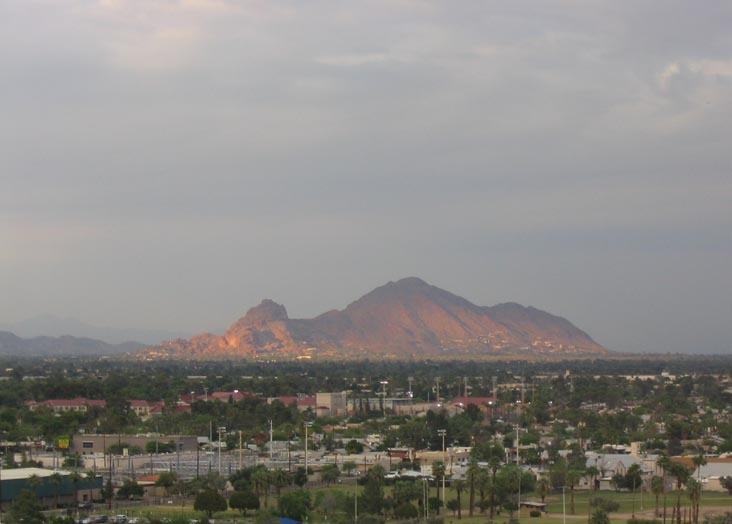
Camelback Mountain is probably the most prominent geological feature that rears its head against the sky in northeast Phoenix and you'll find a number of the valley's most famous resorts laid out around its base. The world famous icon looms over the horizon on the valley's northeast side and provides some of the best urban hiking in America. Camelback is said to be one of the toughest to climb (within city limits), especially if you climb the side without the railing.     


The Echo Canyon Summit Trail and the Cholla Trail are both strenuous and not for the novice.  You can expect to scramble over boulders and loose rocks on some stretches and there are also areas of slippery rock. Camelback Mountain rises 1400 feet above the Phoenix valley to 2704 feet above sea level.  
Where to Park  
Park on Invergordon between Camelback Road and McDonald Drive; then walk up Cholla Lane to the trail. Parking spaces are really scarce and you may find yourself waiting 15 or 20 minutes for a spot to open up. If you are hiking at Echo Canyon you will find a parking lot that will probably be full after 8 in the morning. There are a couple of parking areas within a half mile along McDonald Drive. Parking can really be tough on the weekends and you may have to take a little hike from neighboring residential areas but the views really make it all worth while.  
Trails  
Trailheads on Camelback Mountain are usually open from sunrise to sunset. The main hiking trail loops around the covered picnic area at Echo Canyon. Then it takes off  through some spectacular sandstone rock formations and you'll be rewarded with remarkable views from the top of the mountain out across the city of Phoenix.   
Echo Canyon Trail on the Northwest side of Camelback Mountain, just off McDonald and Tatum, is considered to be one of the most difficult, extreme park trails located within an urban environment in the US. At the Echo Canyon Summit Trailhead you can find portable toilets and a water fountain (not always working). Be sure to bring your own water. Echo Canyon is now closed to visitors at night, but I think that is a small price to pay for the access that the area provides in the daytime. Hikers going down yield to hikers going up and hikers with kids and dogs yield to everybody. Hikers must walk up on the south side of Cholla Lane.  
There are a couple of easy to moderate trails that loop around the scenic portions of the bottom of the mountain and will give families an opportunity to enjoy the views without having to make the climb to the summit. Once you get started on the trails and have a chance to see the views you will probably want to join the other hikers, rock climbers and fitness buffs making their way to the summit of Camelback Mountain. It may be a tough hike but the views of Phoenix/Scottsdale and the mountains in the background are unparalleled.      
Camelback Mountain is a marvelous blend of luxury homes, golf courses, resorts and rugged mountain trails that seem to come together within a natural setting that permits a blended existence of gracious lifestyles and outdoor recreation. 
Jere Moline has been a life long traveler and has enjoyed the cultures of many countries throughout the world. He has experienced several different types of travel both on his own and on planned excursions. For more information on hiking in the Desert Southwest be sure to stop by:
http://www.discounttraveltoday.com

Desert camels


Camels - The Desert Workhorse

The Arabian camel is a desert animal. If necessary, it can go without food for days at a time. The hump on the camels back is fat and this fat serves as stored food. The camel can also go without water for long periods of time but scientists are just beginning to understand how it does this.


The camel is also suited in other ways to desert life. Its broad, padded feet stay on top of sand as the camel walks. When sand blows, the camel can shut its nostrils into slits. And it has thick pads on its knees. It kneels comfortably on these.
The Arabian camel is sometimes called the ship of the desert. Used as a beast of burden, it can carry several hundred pounds. Slightly smaller camels are raised for riding. One humped camels are sometimes called dromedaries.
Arabian camels are mostly raised in the deserts of North Africa and Arabia. They all have one hump. They eat the leaves of desert plants. They belong to the big group of animals called hoofed mammals.
Another kind of camel lives on the dry, cold plains of central Asia. This is the Bactrian camel. It has two humps on its back. It also has long hair. The Bactrian camel can carry a pack over thick snow in below-zero weather. It can stay alive on scrub plants that few other animals would eat. People of the Asian plains raise the camel for milk, meat, hides, and hair for making cloth.
The camels closest relatives are four animals of South America: the guanaco, vicuna, llama, and alpaca.
Lowell has been writing articles online for nearly 2 years now, you can check out his latest website on smead file folders which shows the best at http://www.smeadfilefolders.org/

Camel Festival


About Camel Festival:
Camel Festival is one of the most important as well as the most famous festival of the gem city - 'Bikaner' of the heritage Indian state of Rajasthan. This is a colorful festival with a lot of fun, music, arts and entertaining events. This grand festival is being organized every year by the Department of Tourism, Art & Culture, Rajasthan in the month of January. This year Camel Festival will be organized between 18th to 20th January 2011. Camel Festival is the best event, where you may see the ships of desert - camel.


Celebration:
This tremendous fest is celebrated at the vast grounds, enriched with golden-yellow sands and the massive Junagarh Fort at its backdrop. The magnificent fest starts with the procession of beautifully decorated camels. The camels are fantastically decorated with bright-colored, fancy Rajasthani textiles and stunning accessories. The procession leads to the open sand grounds, where the festival begins.
Events & Attractions:
Camel extravaganza is held on the beginning day of the fest, in which the camel owners decorate their camels in the best way with jewelry and textiles. It is a kind of Camel Show. Also many other such activities like camel dance, best decorated camel, fur cutting design, camel milking and the best camel hair-cut are performed. Under their trainers, the camels give such amazing performances, that force everyone to cut its finger.
Camel race is the major attraction of the fest, in which camels of all the region take part. A number of tourists and visitors come to see the race and to cheer their favorites as well.
The evenings of the fest are in the name of local arts and folks. Various artists give their wonderful performances of dance, folk music that mesmerize the visitors.
The festival ends with the fascinating fireworks, that glitters the whole sky and leave unforgettable memories in the hearts of visitors.
Plan Rajasthan Tours and enjoy the colorful Rajasthan Festivals.