INFL

Tuesday, April 3, 2012

facts about whales


Whale Conversations - Explore the Mystery


As we marvel at the mass and acrobatic agility of humpback whales we are mesmerized by the ongoing chatter between these ocean giants. We are amused to hear them wop, thwomp, squeak, grunt, groan and moan without realizing that each rumbling sound is a signal, warning or affectionate sonata. While only humpback males perform the lilting whale "song" all of the great whales emit these social sounds. It is interesting to note that the humpback whales in the North American Atlantic sing the same song, while the whales in the North American Pacific sing a different song. A typical song lasts from 10 to 20 minutes. Not only is their song lengthy, their vocabulary is extensive with marine experts recording some 660 sounds from migrating east Australian humpback whales.
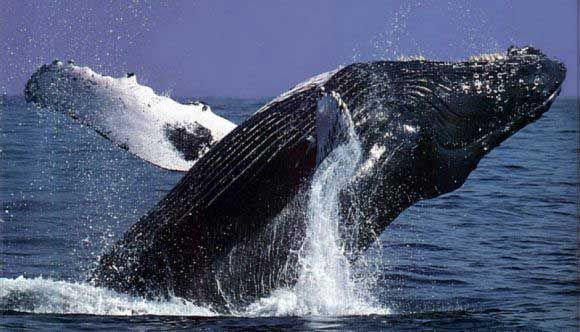

But did you realize that it is possible for you to actually communicate with whales? No, I have not been sucking on the helium. As we learn more about these magnificent and social creatures there is much for us to learn about ourselves and our ability to connect with whales through a peaceful, telepathic conversation.
"What," you might ask, "would I say to a whale? How would I begin the conversation?"
Just as with anyone whom you initially encounter, you will want to establish a feeling of friendliness and interest in who they are. You will want to show respect for their surroundings and that you are happy to be in their presence. You will want to let them know that you love them and are grateful for their being; that you are not going to force your will on them; that you want to share a quiet moment with them. As you share their environment and allow the natural telepathic abilities within you to take over, an amazing conversation could ensue.
Swimming with humpback whales in the warm azure waters off the Pearl and Coiba Islands in Panama offers the life enlightening opportunity to experience for yourself what experts, who have worked with marine mammals for decades, have known. All species of whales can communicate and have messages for humans. These nutrient-rich waters offer a unique opportunity to view thousands of whales as it is the only place in the world where whales from Alaska and Antarctica converge to feed and care for their young. From July through October several thousand whales arrive from Antarctica and from December through February several hundred come from Alaska, giving Panama two unique whale seasons.
Award winning author Mary J. Getten has teamed up with the creator of Whale Communicators, Staci Housum, to create a DVD which teaches how to communicate with whales and dolphins. In turn the cetaceans have agreed to assist humans with opening their hearts to this higher form of conversation.
What has been a long-standing mystery can now be penetrated by those who are willing to take the plunge. Whale Watching Panama offers 1 to 5 day tours which will allow participants to engage in an experience that involves encounters with Humpback and Pilot whales, dolphins and porpoises while enjoying marine fauna, turtles, birds, monkeys and other terrestrial wildlife in a UNESCO World Natural Heritage Site.
To arrange a whale watching tour go to http://whalewatchingpanama.com. To purchase a Whale Communicators DVD go to http://whalecommunicators.com/store

whales


Whales at Hermanus

Cliffs on one side and mountains on the other, the secluded town of Hermanus rests at the very end of Walker Bay. Here is where the whales live.
While strolling down the harbor, you can see hints of this towns past, as a quiet, out of the way village filled with the work and lives of fishermen. Today, however, while Hermanus is still making a living from the sea, it's now a full fledged tourist town.


A Modern City and a Bygone Era
Hermanus boasts all of the conveniences that people today demand. There is fine dining, malls and markets to sate the shopping demons, clean beaches waves to surf and sporty boats for rent.
There is also a very nice museum, Old Harbor Museum; here you can gawk at cases of old fishing paraphernalia, fishing boats from the seventeen and eighteen hundreds as well as the skeletal jaws of sharks.
Whale Watching
Hermanus tourists tend to have one thing in common. They are whale watchers. There is probably no better place in the world to observe these majestic creatures than from the cliffs of Hermanus, except maybe from a boat on the water there. Hermanus is located on an inlet bay. The baleen whales called the southern right Wales come to Hermanus to birth and raise their young in the summer months.
Baleen refers to the way these whales feed. They have no teeth. The Hermanus Southern Right whales are filter feeders. The plates they use to filter krill, plankton and fish are called Baleen. They are made of keratin, like our nails and hair. Historically, it was used to stiffen corsets and collars as well as in parasols.
The Southern Right Whale
During a time when people hunted with abandon, The whales of Hermanus were a favored breed. These Whales have a considerable amount of blubber which was prized for cosmetics, toiletries and lamp oil; it made these whales float to the surface when they were killed. This made the harvest easy and earned them The "Right" in their name, as they are the right whales to hunt. The "Southern" just refers to the part of the hemisphere that they populated. There s also a "Northern Right Whale"
Southern Right Whales are black. They commonly have large patches of calloused skin, called callosities. These raised patches are covered in cyamides which are parasites, also called whale lice. From a distance, these infestations are often confused for barnacles and the whitefish patterns makes each whale unique and easy to track.
Hermanus Tourism
As a successful tourist destination, accommodations in Hermanus can be very expensive. Some options could be to either book in advance and take advantage of any discounts the hotels might have, or travel in a larger group for a longer period and find a vacation rental home. A good place to look into this is at the Hermanus Accommodation Centre.

whale


Whales and Whale-Watching in Costa Rica

For thousands of visitors to Costa Rica whales and dolphins are a wonderful part of their vacation experience. The country's marine waters are home to or visited by 35% of all the remaining species of these creatures.
In fact, there are 29 different species in Costa Rica's tropical waters, ranging from the mighty Blue Whale---the largest animal the world has ever seen---to a recently discovered freshwater porpoise, the Tucuxi---previously thought to exist only in the Amazon River.


And, of course, there are Humpbacks, always a whale-watcher crowd pleaser. At 50' and 40 tons, many of these great creatures, one of the world's great underwater singers, spend their Northern Hemisphere summers as far north as Alaska and winter off the Costa Rica coast.
Not to be outdone, the Antarctic Humpbacks swim even further so that, during the Southern Hemisphere winter, they migrate to Costa Rica, too.
The result? Costa Rica has the longest Humpback whale-watching season on earth.
While whales can sometimes be seen off the entire Pacific coast of the country, the central and southern coasts are particular suited for whale-watching.
Humpbacks are more regularly seen from Jaco, Costa Rica, south to the Osa Peninsula (and magnificent Corcovado National Park) between December-March and again from August-October.
A particularly good spot to see Humpbacks is at Marino Belleno National Park (Whale Marine National Park) a few miles south of Dominical, a popular surfing area.
From November-April, False Killer Whales and Pilot Whales can be seen along the southern coast, too.
And, of course, there are many varieties of porpoises, many of which are year-round residents, often numbering in the dozens and sometimes seen in the hundreds or more, particularly along the southern coast around Drake Bay or the Osa Peninsula.
Turning to the other coast, the Caribbean, travelers might see the Tucuxi (also called Guyana) porpoise, one of the country's smallest, but very unique, species of porpoises. These creatures are found in both fresh and salt waters of the Gandoca Manzanillo National Wildlife Refuge. Sometimes they are found far upriver in the Sixaola River close to the border with Panama.
Not only are they the only freshwater porpoise north of the Amazon River, they are the only known porpoise that shares a common language with another species of porpoise: the Bottlenose Porpoise.
To see these creatures it's best to hire a local guide but with a bit of luck, you might find them almost any day of the year.
About the writer: Vic Krumm lives in sunny Costa Rica. Visit his acclaimed website about Costa Rica Vacations.
If whale watching while on vacation to this tropical land appeals to you, learn more about Costa Rica Whales here.