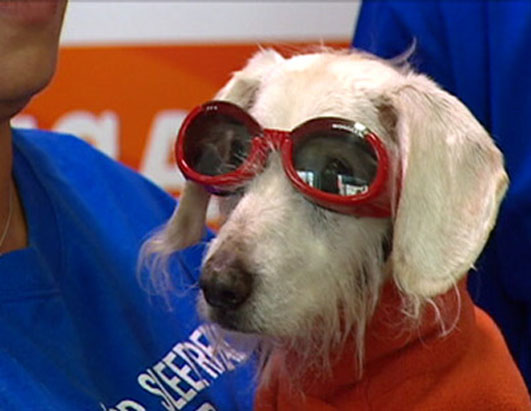
Pets are good for child health
(NaturalNews) TheNew York Timescame up with an article recently entitled "Can Fido and Whiskers Enrich Children's Lives?" Different medical researchers and scientists were consulted for this article, which begs the question: Does research money really need to be spent on this type of question?

It's one thing to write an essay on the topic, especially one coming from real experience. But asking scientists and medical professionals, who are doing research on child and pet relationships, for their opinion as if the facts aren't entirely visible to anyone who bothers to look is rather far-fetched.
Here's a real life anecdote illustrating that absurdity. A young family residing in a large college town had a pre-teen daughter, a dog, and two cats. The father was a college professor while the mother ran a small political fund raising operation out of their home. The daughter asked, "Mom, do animals have feelings?" After a short pause, the mother answered, "I don't know dear, science hasn't figured that out yet."
Relying on science or any authority to determine what should be observable or perceived through experience is indicative of our cultural dysfunction.
Help an animal survive well and that animal can help you emotionally
This is one good reason among others that children should have a pet or pets. Animals, especially dogs, actually bond with human family members. Children can not only learn caretaking responsibility but compassion, as they perceive that indeed, dogs (and yes even cats) have feelings.
One of the doctors consulted in the above-mentioned article did comment that having a pet offers emotional support to children. When children come home from school or play, the dog is there to happily greet them. This is observed as a real event by anyone who has a dog that is treated decently, especially one rescued from an animal shelter or the mean streets.
However, this doctor couched such behavior cynically with the implication that the pet is happy because you may have a food treat for it. That's just not usually true. This author has dealt with different animals from horses to parakeets, and dogs and cats. They do show gratitude for help given and good company shared. They do not "mimic" body language, as most "experts" claim,
solely for expected favors.
Of course, some dogs and cats can be a little out of sorts, just like humans. Allowing vets to drug or vaccinate them to the fullest extent can exacerbate such behavior and worsen your pet's health. Dogs especially need to exercise or they'll get grumpy.
It takes a calm, even-tempered effort to channel pets into agreeable habits or coax them out of any bad ones. Allowing a child to be involved with caring for and training of the family pet can help that child develop character by practicing kindness and patience with appropriate firmness.
Many scientists who research animals and sometimes even animal trainers assume other living non-human creatures are out of touch with real emotions or feelings because they're out of touch themselves. It's their own closed hearts that influence animals in their charge to clam up.
Animals can often sense where humans are coming from emotionally even as they deceive fellow humans. Children can develop a finer sense of empathy by showing their open hearts to directly bond with a pet dog, cat, or other animal. Pets sometimes attempt to comfort humans who are sad or upset. Children can use that break from stress when they're having issues with other humans.
Pets aren't appropriate for all kids. But for many they're fun to play with, interesting to observe, and a pleasure to have around. That's healthy, and you don't need a research team to figure that out.
Sources for this article include:http://well.blogs.nytimes.comhttp://www.aspca.org/pet-care/kids-and-pets/http://www.petloveshack.com/kids.html
Learn more:http://www.naturalnews.com/035600_pets_children_health.html#ixzz1sUAatwx0